Surf camp for intermediate and advanced surfers in Cádiz
Surf camp for intermediate and advanced surfers: how to keep improving
You can pop up, catch waves and find your way around the line-up. But lately, it feels as though you keep making the same movements. Do you need more practice, better technique or someone to help you spot what you’re missing?
If you’re looking for an intermediate or advanced surf camp in Cádiz, this guide will help you work out what to focus on and which kind of surf experience might suit you best.
01 · Know your starting point
Intermediate or advanced? Look at what you can do in the water
There is no universal line between surf levels. Saying you’ve surfed for three summers, for instance, tells us less than knowing which waves you can catch by yourself and what happens once you’re standing.
When you’re an intermediate surfer
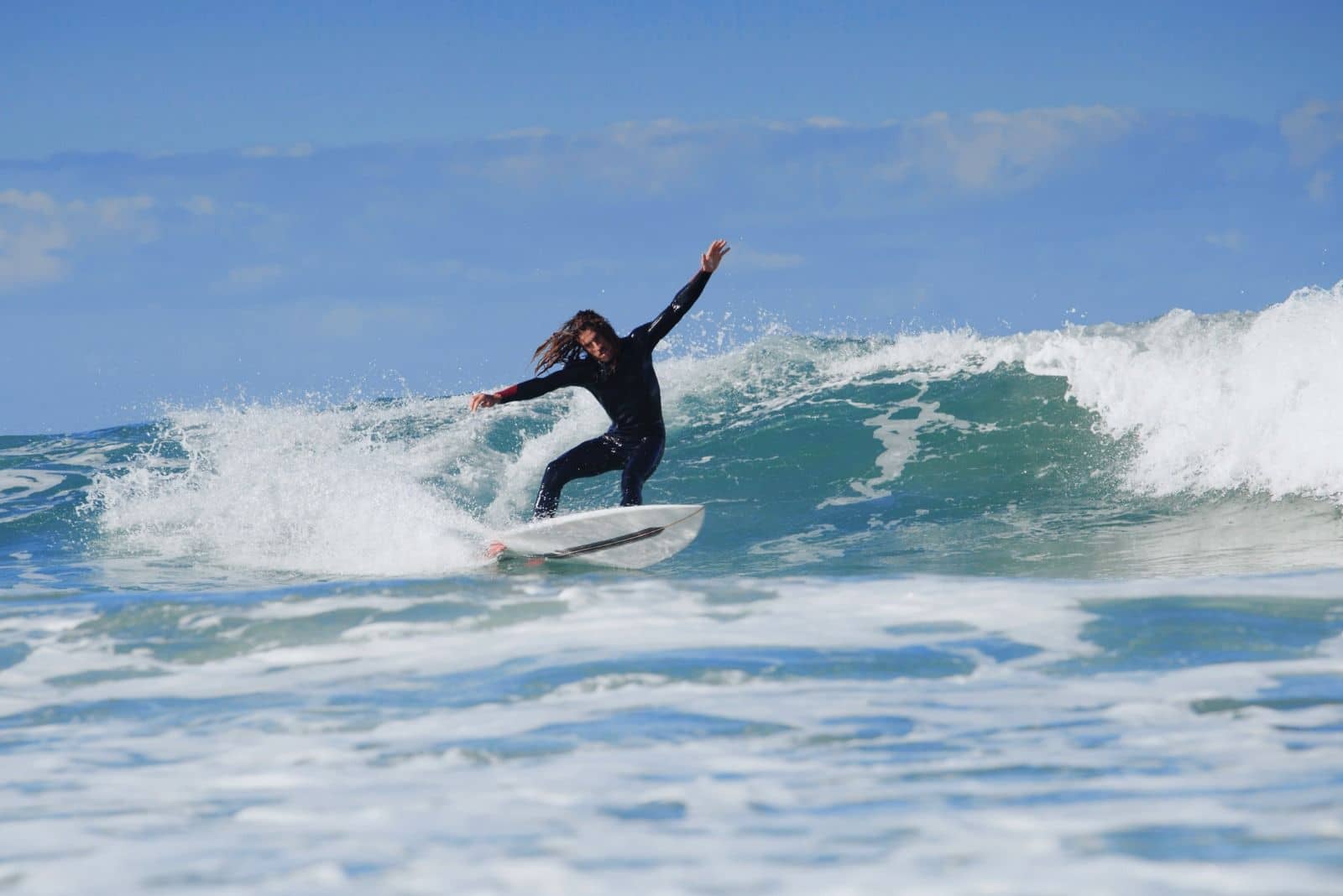
You can usually catch some waves without help, pop up and begin to ride along the face. The next challenge is often choosing better waves, finding the right position, maintaining speed and linking movements more consistently.
When your surfing is more advanced
You’re more independent and in control, you read sections better and you work on manoeuvres with a clear purpose. Conditions still change, though, and there are always parts of your technique you can refine.
The useful question isn’t “What level am I listed as?” It’s “What can I do safely and consistently in the conditions I’m going to surf?”
02 · Common sticking points
Why you can surf for months without feeling much progress
Getting in the water regularly builds experience. But if you repeat the same session without knowing what you’re trying to improve, you can end up repeating the same mistakes too.
You catch a wave, but it runs away from you
Before blaming the board, look at where you paddle from, when you pop up and the line you choose afterwards. Sometimes the problem starts before you’re even on your feet.
You’re standing, but you lose speed
Paddling harder isn’t always the answer. It may be about the line you take, where you put your weight or whether you’re reading the next section of the wave early enough.
You want to turn, but it doesn’t come together
Pay attention to where you’re looking, how your shoulders are positioned and when you start the turn. One small correction you understand can be more useful than trying to fix ten things at once.
Some conditions feel easy; others throw you off
Wave size and power, wind, currents and crowds can completely change a session. Progress also means learning to choose conditions that match your abilities.
These are common examples, not a diagnosis from a distance. A coach who can watch you surf may help you tell the difference between a technical mistake, the wrong wave choice and conditions you’re not ready for yet.
03 · A simple approach
Give your next surf sessions a clear purpose
You don’t need to take a notebook out to the peak or treat every session like an exam. But it helps to paddle out knowing what you want to pay attention to.
Pick one thing to work on
For example, focus on riding along the wave before trying to turn. A specific goal makes it easier to notice what is changing.
Choose suitable conditions
In waves that are too demanding, you may spend the whole session just trying to get through it. Picking the right day is part of training too.
Get feedback you can act on
“Bend your knees more” can be too vague. It’s more helpful to understand exactly when the mistake happens, why it changes your ride and what to try on your next wave.
Check what actually changed
After your session, think about two or three particular waves: what you tried, what happened and what you’d repeat tomorrow. Not every wave has to go well for you to learn something.
04 · See what really happens
Video analysis: how it can help you understand your mistakes
In the water, you can’t always feel exactly how you’re standing, the moment you pop up or the line you’re drawing across a wave. Watching yourself from the outside may reveal a difference between what you thought you did and what actually happened.
The point isn’t to collect clips. It’s to review footage with one clear question in mind. If you’re losing speed, for example, look at your starting position and the line you took before worrying about turns or manoeuvres.
When a coach turns those observations into a specific correction and you then have another session to practise it, the video becomes a learning tool rather than just a keepsake.
A group review session. Seeing a ride from the outside gives everyone a chance to discuss things that are easy to miss while surfing.
Footage being reviewed on a laptop. The next step is turning what you see into something you can practise.
Videos don’t play automatically and are set to limit loading before you press play, helping reduce unnecessary mobile data use.
A practical example: if your pop-up works in easy waves but you get caught behind the breaking section in faster ones, it’s worth reviewing your positioning and timing before trying to compensate by using more force.
If you’re wondering how this differs from a more conventional lesson, read NEXO’s guide to surf lessons versus surf coaching.
05 · Train over several days
What a surf camp can offer when you already have experience
An intermediate surf camp shouldn’t treat you as though you’ve never surfed before. You need sessions that build on what you can already do, time to practise and room to rest when your body or the conditions call for it.
At NEXO Surfhouse in El Palmar, Cádiz, surf lessons are organised by ability, with groups of up to six students per instructor. Depending on your package, you’ll also have access to suitable equipment and can combine your time in the water with activities such as surfskate or yoga. Find out how NEXO’s surf camp works.
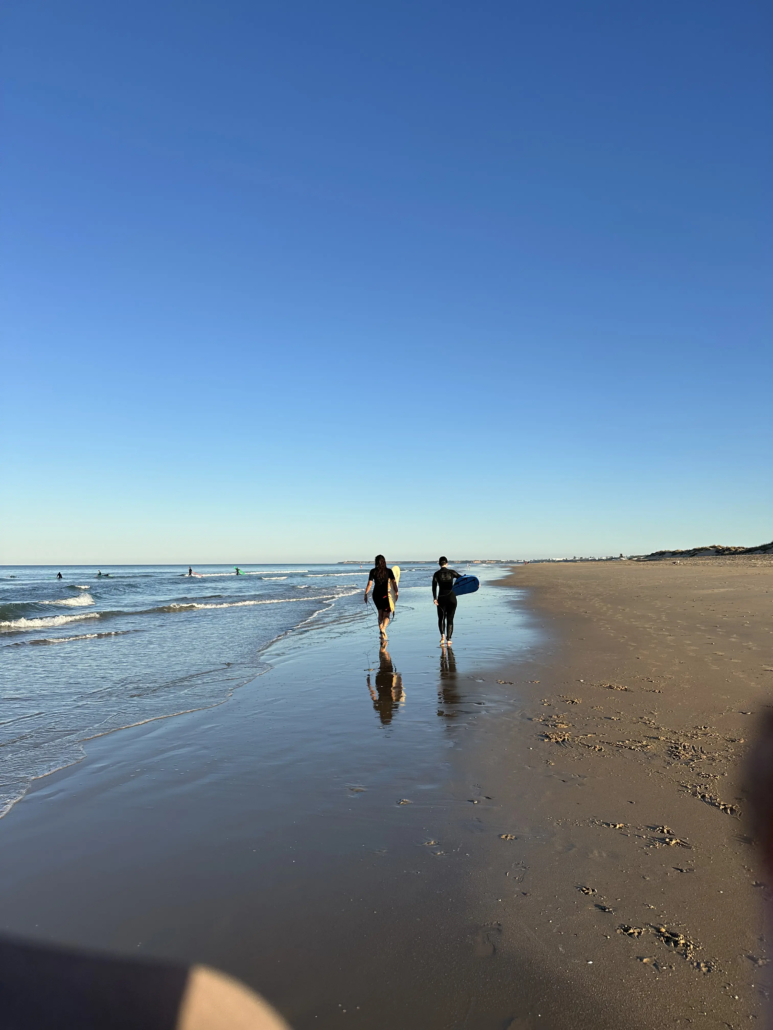
A short moment from the water. Sea conditions affect what makes sense to practise on any given day.
El Palmar is a surf destination where surfers of different abilities can be in the water, but not every wave or every day is right for everyone. If you’re planning a trip, read when to visit a surf camp in El Palmar and choose your dates around your ability, not just your calendar.
06 · Choose your next step
Regular surf camp or Surf Clinic? They’re not the same
The difference is what you need, not which option sounds more advanced. If you want to surf, enjoy the week and build your skills at a steady pace, a camp with ability-based groups may be enough. If you’re already independent in the water and want more focused technical training, a Clinic might be a better fit.
Surf at your own pace
If you’re confident surfing independently and prefer choosing your activities, schedule and services, compare the flexible packages before booking.
Level-based surf camp
If you want to combine suitable lessons, equipment, accommodation and a week of surfing without making intensive technique work the whole focus.
NEXO Surf Clinic
If you meet the entry requirements and want coached sessions, video analysis, personalised feedback and clear training goals.
The current NEXO Surf Clinic programme lists nine coached surf sessions, daily video analysis, surfskate, yoga and accommodation. Dates, places and conditions may change, so always check the programme page before planning your trip.
Important: the Clinic requires genuine independence in the water. Its published requirements include paddling into waves without assistance, a consistent pop-up, riding unbroken waves, handling yourself around other surfers and being able to reach a break with a rocky bottom. If you’re not sure you meet those requirements, ask before you book.
07 · Look beyond the name
Five questions to ask before booking a surf progression camp
- How do you assess my level? Explain the conditions you normally surf in and which manoeuvres you can actually do.
- What kind of feedback will I get? General tips in a surf lesson aren’t the same as sessions built around goals and technical review.
- How much time will I spend in the water? Check the number and length of sessions, and how they adapt to the weather and sea conditions.
- What equipment can I use? Knowing which boards are available and whether you can switch according to conditions can make a difference.
- What’s included in the full price? Check accommodation, meals, any transport and activities so you can compare like for like.
If you’re still comparing costs, read our guide to surf camp prices in Cádiz and what’s included.
Ready to take your surfing further in El Palmar?
Tell us about your surfing experience and what you’d like to improve. If you’re already independent in the water, have a look at the Surf Clinic. If you’d prefer a more flexible week, explore the surf camp options before deciding.
08 · Common questions
FAQs about intermediate and advanced surfing
Do I need to be advanced to join a surf camp in Cádiz?
No. Some surf camps offer lessons for different abilities. What matters is checking the entry requirements for specific progression programmes such as a Surf Clinic.
How much can I improve in one week of surfing?
It depends on your experience, how often you surf, the conditions and what you’re working on. A week can help you identify and practise corrections, but nobody should guarantee that you’ll master a particular manoeuvre or jump to a new level.
Is video analysis useful if I’m not an advanced surfer?
Yes, as long as you’re looking at something specific. It can help you understand your position during the pop-up or why you lose speed, for example. It doesn’t replace practice or feedback from an instructor.
Can I join the NEXO Surf Clinic if I mostly surf whitewater?
Based on the Clinic’s published entry requirements, it wouldn’t be the right option yet. It’s better to build your independence and ability to surf unbroken waves in a programme suited to your level first.
Should I prioritise more time in the water or coaching?
If you’re still building the basics, more quality time surfing may be important. If you’ve been repeating the same mistake for a while, clear feedback you can put into practice may be more useful than extra sessions with no specific goal.
Nexo Surfhouse
Surf camp and accommodation in El Palmar, Cádiz.
We’ve been in El Palmar for over a decade. Surfing, food and people are at the heart of how we experience this place. We write about what we live and see here, season after season.