Surf Camp for Beginners in Cádiz: What to Expect in Your First Experience
If you have never surfed before and you are thinking about joining a surf camp for beginners in Cádiz, it is completely normal to have doubts.
Do I need to be a strong swimmer? Am I going to make a fool of myself? Will I be able to stand up on the board? This article answers the things that really worry you before you come.
Why Cádiz Is a Good Place to Start Surfing
The coast of Cádiz has something that makes things much easier when you are starting out: long beaches with sandy bottoms. That means gentler waves, less risk of impact, and a more controlled environment for taking your first steps.
El Palmar, in particular, has been one of the main reference spots for learning in southern Spain for years.
Not because it is the only place with waves, but because the conditions tend to work well for much of the year and there is an established range of surfcamps prepared to welcome people who have never entered the water with a board before.
What a Surf Camp for Beginners Includes
When we talk about a surf camp designed for beginners, there are certain elements that should always be there.
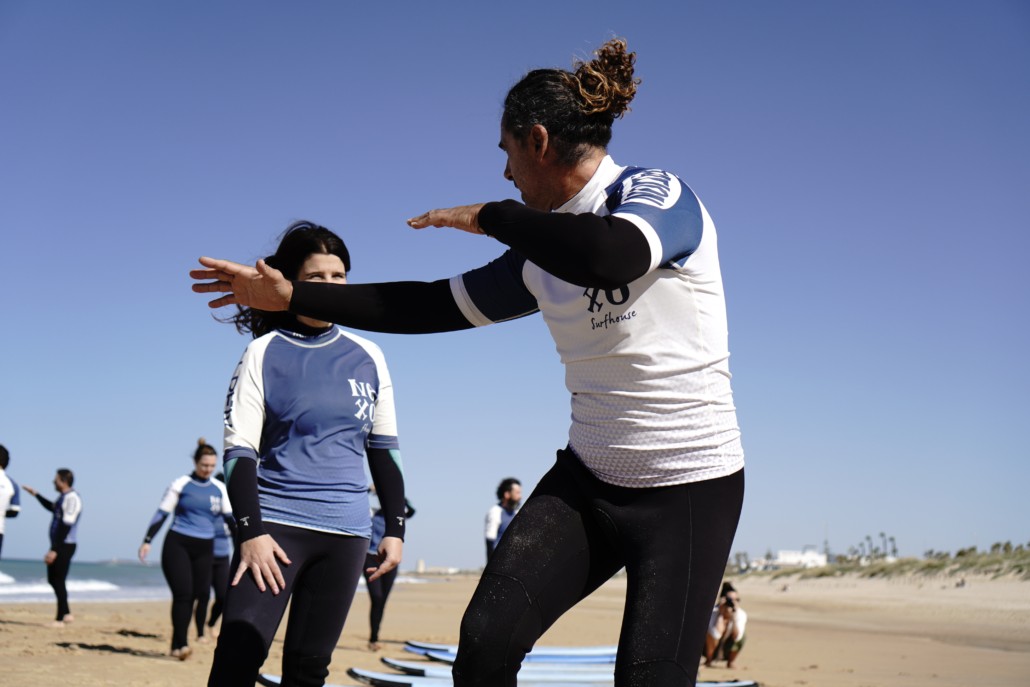
- Structured lessons by level: learning in a group where everyone is starting from zero is not the same as being mixed in with people who already surf. A good camp separates groups and adapts the goals of each session.
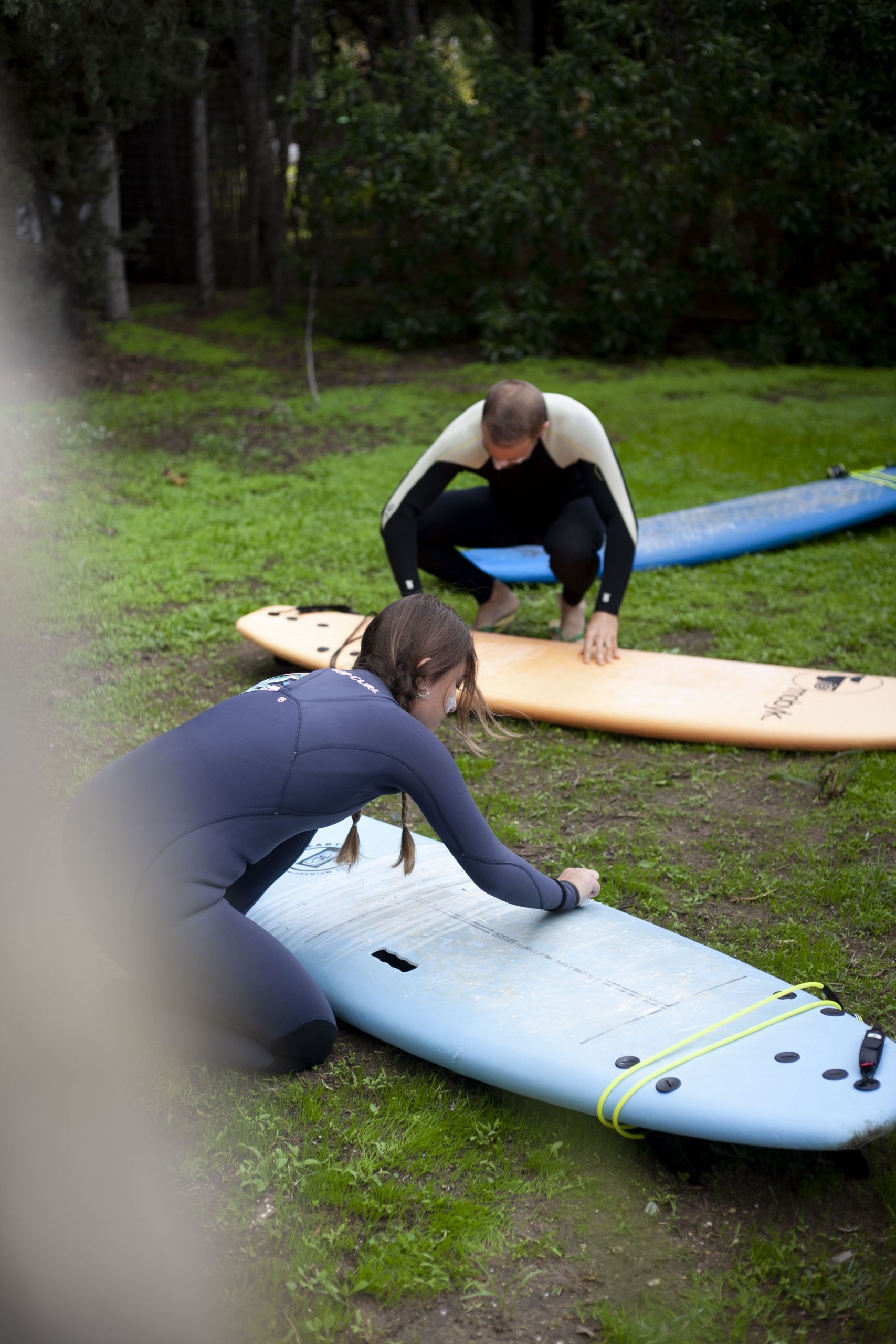
- Included and suitable equipment: in the beginning, large and stable boards are used because they are easier to handle. The wetsuit should also be included and suited to the season. If you have to worry about finding gear yourself, something is wrong.
- Theory and safety before entering the water: knowing how to position yourself on the board, how to paddle, how to read the waves, and what the basic lineup rules are is not filler. It is what makes your first session meaningful instead of just swallowing water.
- Real feedback: what sets a serious camp apart from isolated lessons is continuity. Someone who corrects you, tells you what to improve, and allows you to apply it the next day.
If you want to better understand the difference between signing up for a single lesson and living a structured multi-day experience, we explain it here in detail: what a surfcamp is.
If you want to see how we organize the experience at Nexo and what options are available, you can check our packages here or answer specific questions in our frequently asked questions section.
Questions Almost Everyone Has Before Coming
Do I Need to Be a Very Good Swimmer?
You need to feel comfortable in the water and know how to stay calm. You do not need to be a competitive swimmer, but you do need a basic level. If you panic as soon as you cannot touch the bottom, surfing may not be the best idea just yet.
Will I Be Able to Stand Up?
Most people manage to stand up within the first few days. Not with style, not with full control, but enough to feel that they are making progress. Surfing has a steep learning curve, but the first wins come sooner than you imagine.
Is It Normal to Come Alone?
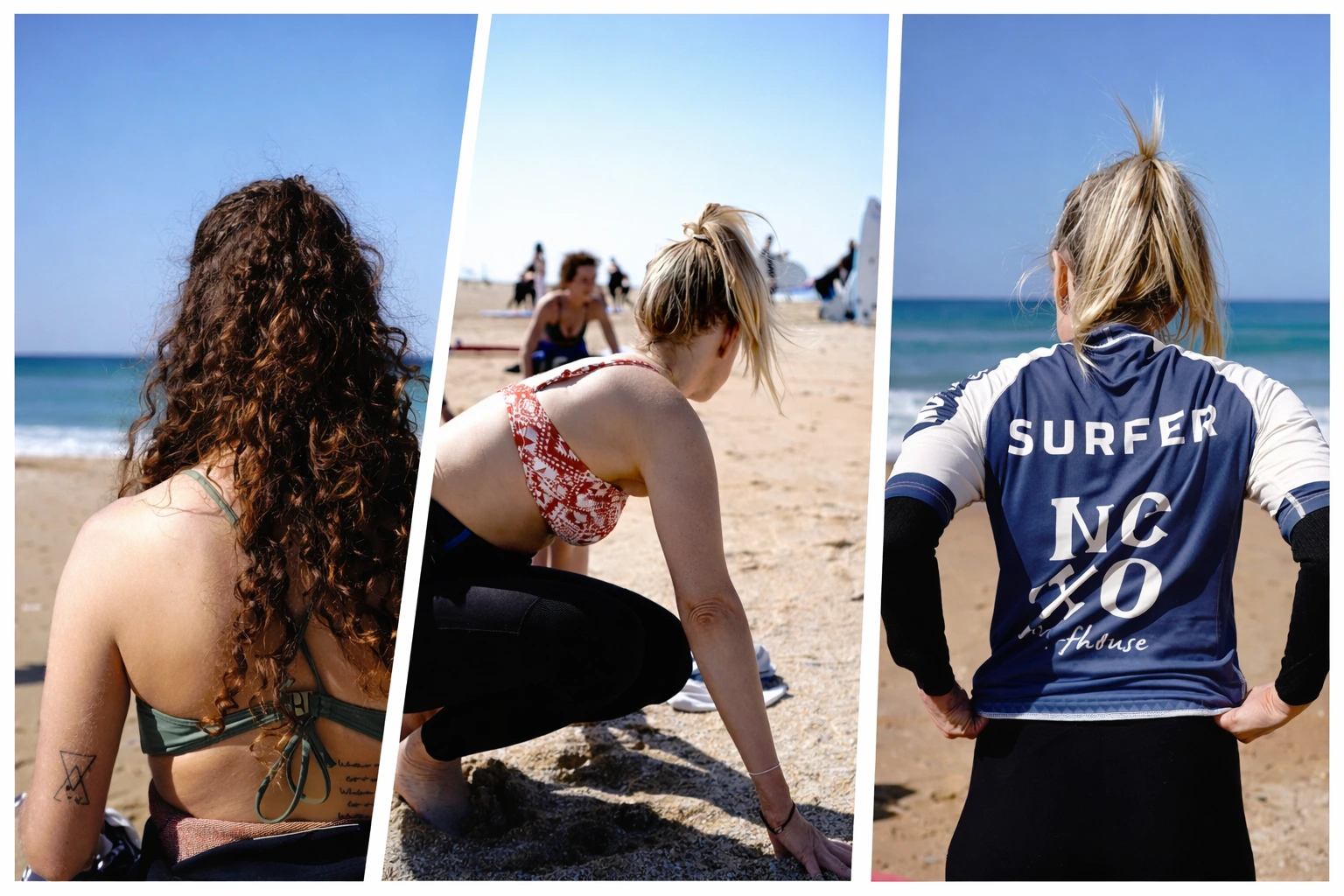
Very normal. In fact, many people who come to a surfcamp do so without company. The format makes it easy to meet others in the same situation, and the atmosphere usually makes that feeling of “coming alone” disappear quickly. If that part makes you hesitate, here we talk in more depth about what to expect if you go to a surfcamp alone.
Am I Going to Make a Fool of Myself?
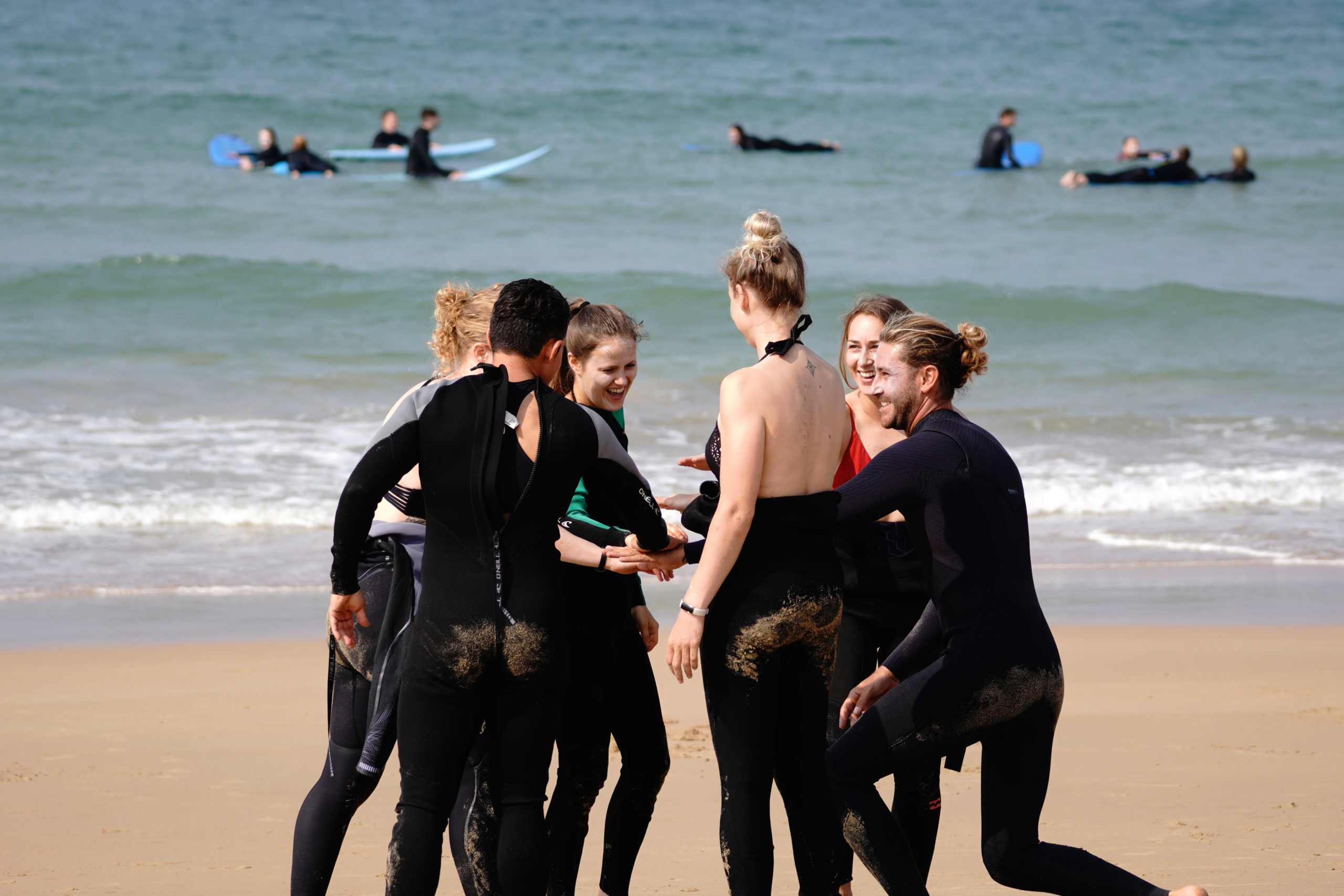
You are going to fall. Many times. But everyone else will too. Looking ridiculous does not exist when the whole group is learning and the atmosphere is not competitive.
A good surfcamp takes care of that: making you feel comfortable failing, because failing is part of the process.
What a Day at a Surf Camp for Beginners Is Like
The day usually starts by checking the sea conditions. Depending on the wind, the tide, and the size of the waves, the team decides where and when to go in. Before entering the water, there is a physical warm-up and an explanation of what you are going to work on in that session.
The lesson in the water normally lasts around two hours. Long enough to tire you out, but not so long that you stop paying attention.
Afterwards, there is usually a feedback moment: what went well, what needs adjusting, and what to focus on tomorrow.
The rest of the day depends on the format. Some camps include complementary activities such as yoga, mobility work, or surfskate. Others simply leave free time to rest, walk around, or enjoy the surroundings.
According to the International Surfing Association, the organization that regulates surfing teaching standards worldwide, structured programs with progression and supervision are the safest and most effective way to learn.
What to Look at Before Choosing a Surf Camp
If you are comparing options, there are a few questions that help you filter them:
- Are the groups divided by level, or is everyone mixed together?
- Is accommodation included, or do you have to find it separately?
- Are meals included, or do you have to improvise every day?
- What happens if there are no surfing conditions one day?
The clearer all of this is before booking, the fewer surprises you will have. If you want a more complete guide on how to choose well, here is the article where we explain it in depth:
Surfcamp in El Palmar, Cádiz: guide to choosing according to your level.
If you also want to compare season, accommodation, travel style and camp format, read our complete guide to choosing a surf camp in El Palmar.
The Next Step
If you have made it this far, what you probably lack is not more information, but making the decision. A well-designed surf camp for beginners gives you structure, guidance, and an environment where getting things wrong is part of the plan.
At Nexo, we have spent years welcoming people who had never even touched a board before. We know what works and what does not.
If you would rather talk it through before booking, write to us. We will help you figure out whether this is the right fit for you.